Drywall Finishing
Seams finished to whatever level your paint and lighting demand, textures matched or applied, and skim coats that turn rough or textured walls smooth.
Lansing Elite Drywall provides drywall repair and installation in Potterville, MI, and handles drywall replacement in Potterville houses, manufactured homes and garages.
Request a quote
Leave a name, a number and a line about the job. We will ring you back.
In Potterville, around 40% of the homes here are rented, which can lead to many drywall repairs in these rental homes, as there are constant leaks that sometimes don't get reported in time, and other damages to the sheetrock walls. 11.6% of the homes are in buildings of five-plus units, and about 31% are mobile homes, which mostly have paneling and not taped drywall.
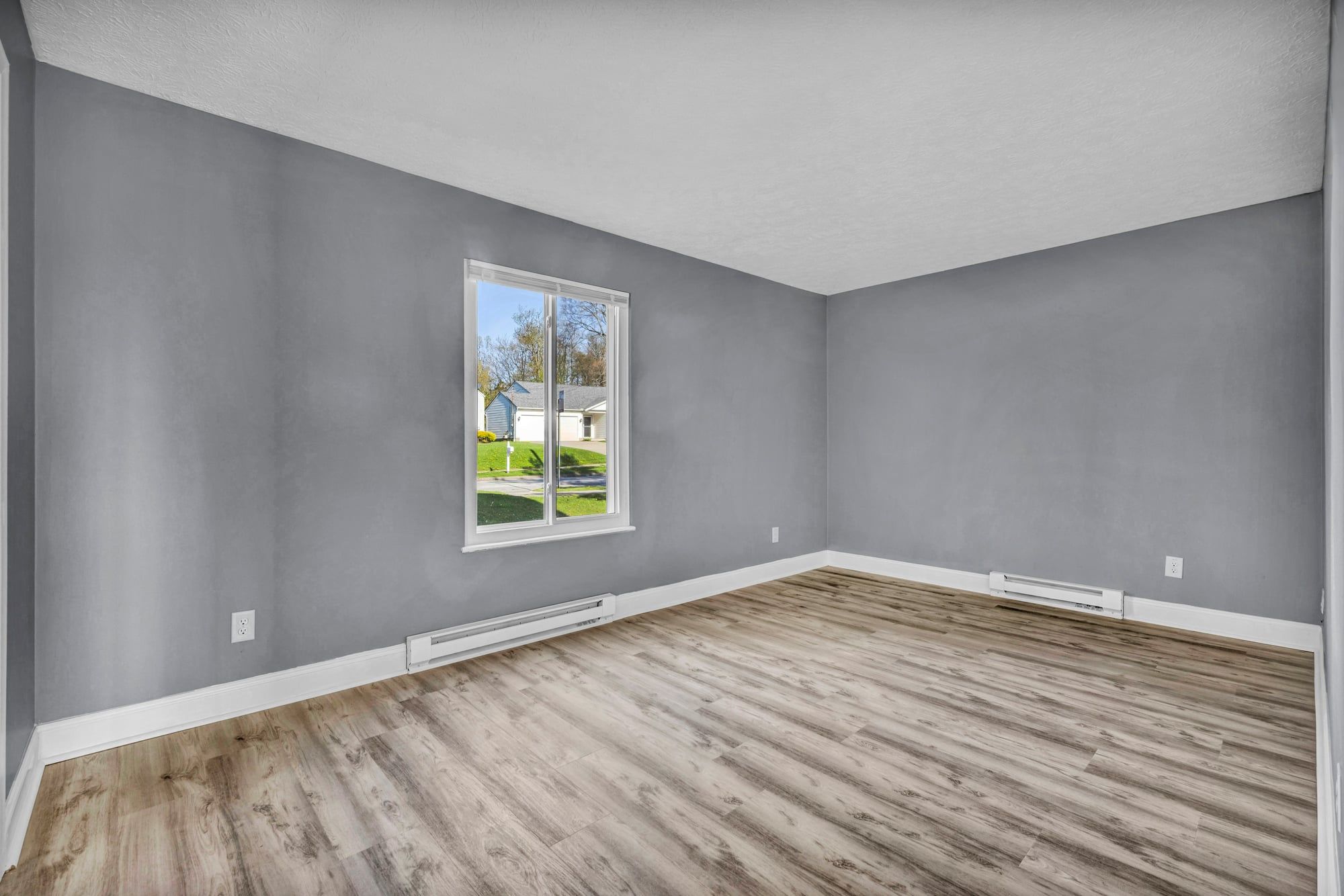
I was surprised that approximately 40% of all homes here are rentals, which can lead to many drywall repairs. Renters don't always report leaks right away, which can mean that a whole ceiling tear-out is necessary. About 31% of the homes here are mobile homes, which typically don't have taped drywall.
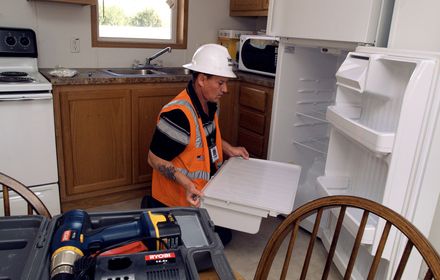
Vinyl-covered panels in manufactured homes are typically gypsum sheetrock panels with a printed vinyl face adhered to the gypsum. Battens are used instead of tape. They are narrow strips that cover the joints between two panels. A damaged panel is replaced between battens, or patched and painted when the pattern cannot be found.
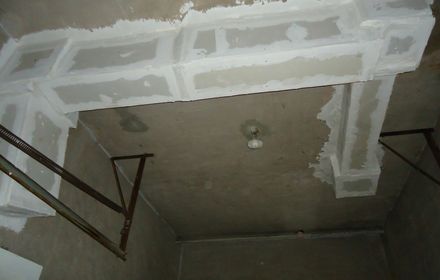
The shared wall takes 1/2-inch board or thicker facing the cars. Where a bedroom sits over the garage, its ceiling takes 5/8-inch Type X. A hole there gets the same board and taped, filled seams, not a quick patch.
In homes near I-69, truck noise can carry through a single layer of standard 1/2-inch wall. Sound-reducing drywall helps: a board with a damping layer inside it, or an added layer of 5/8-inch board over the first, with the gaps at outlets and the floor sealed. It cuts the hum; it does not make a room silent.
With two-story entries, typically in houses built in the 2000s and newer, scaffolding is required for workers to do a safe and complete job. Stepladders at this height can be dangerous, plus they can damage or scratch the existing walls they rest against. Any crack high up on the wall should be repaired using paper tape, with setting compound behind the tape and on top of it. This can keep the old crack from cracking again in the months to come.
Large windows let in a lot of light, which can shine onto the walls inside, especially at an angle. When this is the case, a level 4 or 5 sheetrock job is typically needed, meaning multiple thin skim coats that feather into the existing walls, sometimes 2 or 3 feet past the repair, so it looks flat in the shallow light. With flat paint on the wall, it is not as critical, because flat paint won’t show as many imperfections. Any kind of sheen, like eggshell or satin, will show imperfections in the wall and needs several skim coats.
Potterville sends building permits to the Eaton County Construction Codes Department. The city’s zoning administrator first tells you whether a project needs one. A patch or a single damaged panel usually does not; a new wall, a finished basement or a remodel can, so ask before the work starts.
Potterville is about 22 minutes from Lansing, southwest down Lansing Road. The city sits where M-100 crosses Lansing Road, just north of its interchange with I-69.
We also serve Portland, MI, the old river town where the Looking Glass meets the Grand.
Potterville has a population of about 3,121. Here is what that means for the work we do here.
| Local fact | Detail |
|---|---|
| Homes built since 2000 | 38% of the city's 1,274 housing units; 26% went up in the 2000s alone. |
| Median year built | 1994, with only about one home in eleven from before 1940. |
| Mobile homes | 31.4% of housing units, close to one home in three. |
| Building permits | Issued by the Eaton County Construction Codes Department; the city's zoning administrator says whether a project needs one. |
| Highways | M-100 meets Lansing Road in the city, with an I-69 interchange just to the south. |
Seams finished to whatever level your paint and lighting demand, textures matched or applied, and skim coats that turn rough or textured walls smooth.
Garage walls and overheads hung to the residential code, Type X below bedrooms, finished for parking or a heated shop.
Brown rings, soft spots and drooping ceilings after ice dams, split pipes, bathroom leaks or basement water, opened, dried out and rebuilt to blend in.
Cracked seams, corner gaps that open every winter, sagging board, cracked plaster and holes left by fans or plumbers, repaired after the cause is found.
Lower-level rooms boarded and finished once the foundation is dry, moisture-resistant sheets at slab level, Lansing permit in hand.
Acoustic texture sampled, misted and scraped off, then the bare ceiling skimmed smooth for primer.
Cracked and sagging old plaster pulled back tight and skimmed, or stripped out for new board once its lath gives up.
Describe the room and what happened to it. We call back with what the repair or hang probably involves and which details push the number up or down.
Yes, but always under the community rules. Sometimes there are set working hours for trucks to be in the community, and we always follow those rules. Tell us the rules when you book, and we plan the visit around them.
Yes, it is simple to patch where a thermostat was moved and make it look like it was never there. We skim the filled holes, sand it flat to match the existing wall, then prime and paint it to blend in.
Not always. It needs replacing only if it's soft board, meaning you press on it or push a screwdriver in and it's soft. We always use a moisture meter on the wall to see what the moisture content is. What is soft comes out, and the cavity dries before the wall is closed.
Yes. A light dent gets filled and sanded. A crushed or loose metal corner bead is cut out and replaced, then finished in three coats so the edge runs straight again.
Yes. We open a small hole at the TV and one near the outlet, run the low-voltage cable or a recessed box between them, and patch both openings. Power cords themselves should not run inside a wall.
Plan on two or three short visits over a few days. Each coat of compound dries overnight before the next one, then the patch is sanded and primed, and the paint goes on last.
Ringing (517) 940-8317 gets you a first figure fastest. Otherwise fill in the form and expect a callback.